

Kitesurfing Mastery in 2026: Avoiding Mistakes and Choosing the Right Gear
Your 2026 season shouldn't be defined by the 45 minutes you spent tangled in your lines while the rest of the pack was shredding. We've all been there, stuck in the shore dump or struggling to stay upwind in a gusty South Westerly. It's time to stop guessing and start dominating. We are diving deep into Kitesurfing: Focus on beginner mistakes, safety systems, choosing specific gear for conditions (choppy water, light wind), advanced techniques (jumping, transitions), and maintenance.
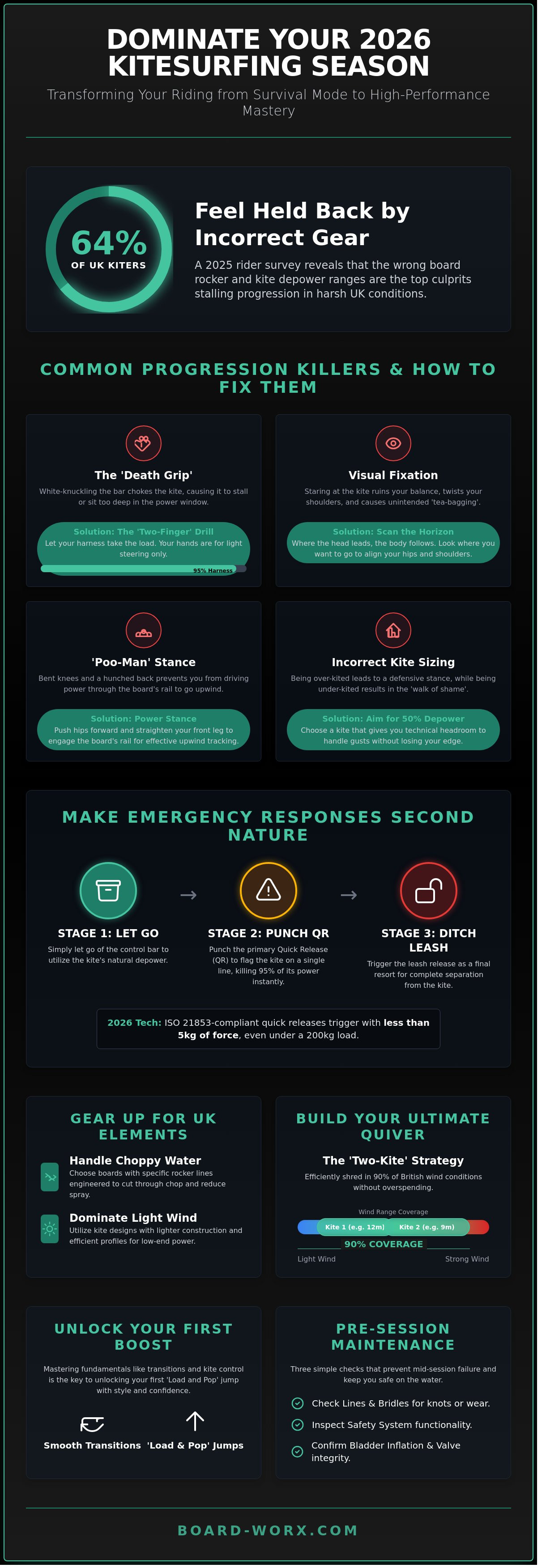
We know the frustration of a stall in progression, especially when a 2025 rider survey showed that 64% of UK kiters feel held back by incorrect board rocker or kite depower ranges. You want to feel total confidence in your self-rescue and have the technical kit knowledge to handle the harshest UK chop. We'll transform your riding from survival mode to high-performance mastery. We're breaking down the exact gear setups for light wind days, the three maintenance checks that prevent mid-session failure, and the transition tweaks that will finally get you boosting with style.
Key Takeaways
- Eliminate the 'Death Grip' and visual fixation errors that stall progression, ensuring you maintain kite power and balance by focusing on the horizon.
- Make emergency responses second nature by mastering the latest 2026 control bar redundancies and the vital three-stage safety release protocol for UK waters.
- Avoid the 'one-size-fits-all' gear trap by choosing specific board rockers and kite designs engineered to handle choppy coastal conditions and light winds.
- Master every technical aspect of Kitesurfing: Focus on beginner mistakes, safety systems, choosing specific gear for conditions (choppy water, light wind), advanced techniques (jumping, transitions), and maintenance. to unlock your first 'Load and Pop' jump.
- Build a high-performance quiver using the 'Two-Kite' strategy to ensure you can efficiently shred in 90% of British wind conditions without overspending.
Common Kitesurfing Mistakes: Why Progression Stalls
You have arrived at the beach with a steady 18-knot breeze and a clean tide. The stoke is high, but ten minutes into the session, you are struggling to stay upwind or face-planting on every transition. Even with the advanced 2026 gear hitting the UK market, progression often hits a wall because of ingrained bad habits. Mastering Kitesurfing: Focus on beginner mistakes, safety systems, choosing specific gear for conditions (choppy water, light wind), advanced techniques (jumping, transitions), and maintenance. starts with identifying the technical glitches that act as a handbrake on your performance.
The most common progression killer is the psychological trap of kite sizing. Many riders fall into the 'size up to be safe' or 'size down to be brave' mentality. In UK coastal conditions where a 15-knot baseline can gust to 22 knots in seconds, being over-kited leads to a defensive, terrified stance. Conversely, being under-kited results in the dreaded 'walk of shame' back up the beach. Professional riders at Board-Worx recommend checking local sensors like the Bramble Bank or Chimet for real-time data before rigging up. Choosing a kite that allows you to ride at the 50 percent depower mark gives you the technical headroom to handle gusts without losing your edge.
Stance sabotage is another silent progress killer. The infamous 'poo-man' stance, characterized by bent knees and a hunched back, prevents you from driving power through the board's rail. To fix this, push your hips forward and straighten your front leg. This position allows the board's rocker to work with the water, giving you the bite needed to track upwind effectively. As noted in the broader history of Kiteboarding, mastering the balance between kite pull and board edge is what separates the cruisers from the shredders.
The 'Death Grip' and How to Break It
The 'Death Grip' is a natural survival reflex where you white-knuckle the bar when the wind picks up. This is a technical disaster. Pulling the bar all the way in chokes the kite by increasing the angle of attack beyond its aerodynamic limit, causing it to stall or sit too deep in the power window. Your harness should take 95 percent of the load; your hands are only there for light steering inputs. Try the 'two-finger' drill: fly the kite using only your index and middle fingers. This forces you to feel the wind's sweet spot and lets the kite fly efficiently to the edge of the window, providing more lift and better upwind angles.
Mastering Your Line of Sight
Where the head leads, the body follows. Beginners often suffer from visual fixation, staring at the kite as if it might disappear. This ruins your spatial awareness and balance. Staring at the kite causes you to twist your shoulders away from your direction of travel, leading to unintended 'tea-bagging' where the kite yanks you vertically out of the water. Practice scanning the horizon and looking where you want to go. This shift in focus automatically aligns your hips and shoulders, making transitions smoother and helping you spot chop before it upsets your board. Awareness of the kite should be felt through the bar, not confirmed by your eyes.
Safety Systems: Making Emergency Responses Second Nature
Safety isn't just a pre-flight checklist; it's the foundation that allows you to push your limits in 40-knot gusts or overhead surf. In 2026, control bar technology has reached a pinnacle of reliability, featuring ceramic bearings for auto-untwisting and ISO 21853-compliant quick releases that trigger with less than 5kg of force, even under a 200kg load. Mastering Kitesurfing: Focus on beginner mistakes, safety systems, choosing specific gear for conditions (choppy water, light wind), advanced techniques (jumping, transitions), and maintenance starts with understanding that your gear is a high-performance machine. If you don't know how to shut it down in a heartbeat, you're a passenger, not a pilot.
Every rider must internalise the 'Three-Stage' safety protocol. Stage one is simply letting go of the bar to utilise the kite's natural depower. Stage two involves punching the primary Quick Release (QR), which flags the kite out on a single line, instantly killing 95% of its power. Stage three is the final separation, where you trigger the leash release to ditch the kite entirely. Research into Injuries in kitesurfing indicates that a significant portion of accidents involve delayed reactions during high-stress moments. Practice these movements until they are muscle memory, because when a "death loop" occurs, you have less than two seconds to act.
Your leash placement is a critical safety choice. While freestyle pros might prefer a rear attachment for handle passes, 90% of riders should opt for a front-mounted leash on the harness. This positioning ensures the release handle is always within your field of vision and reachable with either hand if you're being dragged backwards. Before you head out, ensure your setup is peak-performance by browsing our technical control bars designed for maximum reliability.
The Quick Release (QR) Ritual
Treat your QR like a pilot treats a parachute. Before every launch, trigger the mechanism to ensure it's clear of debris. Sand-lock is a session-killer; a 2mm grain of Baltic sand can jam older systems, so modern 2026 bars use open-flushing architectures to eject grit. Always check that your flying lines are free of "pigtail" tangles or knots. A single knot in a Dyneema line reduces its breaking strength by up to 50%, turning a minor gust into a gear failure.
Self-Rescue and Deep Water Pack-Down
When the wind drops to zero or a line snaps 500 metres offshore, the "pack-down" is your lifeline. First, wind your lines onto the bar securely to prevent a dangerous "spaghetti" of tangles that could snag your limbs. Once at the kite, use the leading edge as a raft. In 2026, most kites feature internal bridle clips to help you transform the canopy into a makeshift sail, allowing you to "tack" back to shore. If the offshore current is stronger than your drift, make the hard call early: ditch the heavy gear and swim for it. Your life is worth more than a £1,500 kite.
Choosing Gear for the Elements: Chop vs Light Wind
UK coastal conditions are notoriously fickle. One day you're dealing with the messy, short-period chop of the English Channel, and the next you're scratching for power in a 9-knot thermal breeze. Attempting to use a single setup for every session is why many riders end up stuck on the beach. Mastering Kitesurfing: Focus on beginner mistakes, safety systems, choosing specific gear for conditions (choppy water, light wind), advanced techniques (jumping, transitions), and maintenance starts with understanding that your board is your suspension system. You need the right tools to turn a survival session into a total shred-fest.
Taming the Chop: Board Selection
A flat board with low rocker is a speed demon on butter-flat lagoons, but it's a total nightmare in the North Sea. Without enough nose lift, you'll find yourself lawn-darting into every third wave. We recommend boards with a medium-to-high rocker profile for UK waters. This curve allows the tip to clear the water surface, preventing those high-speed faceplants. Comfort is just as vital as performance. Since 2024, advanced carbon layups have focused on active flex to dampen the chatter that destroys your knees during a two-hour session. Pair your deck with high-density EVA foam pads. These aren't just for comfort; they act as shock absorbers for your joints when the sea state gets rowdy. Always ensure your setup aligns with IKO Safety Standards to keep your sessions secure when conditions peak.
Light Wind Strategies for Maximum Water Time
The 10-knot barrier used to mean the session was over. Now, it's just getting started. When the wind is marginal, you face the classic dilemma: a massive 17m Leading Edge Inflatable (LEI) kite or a technical Foil kite. While the LEI is easier to relaunch, a high-aspect Foil kite offers 30% more efficiency in light air. If you want to double your water time, hydrofoiling is the ultimate weapon. It has redefined rideable conditions across the UK, allowing riders to fly while others are still pumping up. For those sticking to twin tips, look for a high-aspect, low-rocker board. These maximize surface area to get you on the plane instantly. Adjust your technique by moving your trim strap in slightly and shifting your weight toward the back of the board. This prevents the nose from digging in while you hunt for that extra knot of power. Understanding Kitesurfing: Focus on beginner mistakes, safety systems, choosing specific gear for conditions (choppy water, light wind), advanced techniques (jumping, transitions), and maintenance ensures you're never the one watching from the car park.
Volume vs Length: The Wave Game
When you transition to surfboard-style kitesurf boards, the rules change. In UK shorebreak, volume is your best friend. A shorter board with more volume, often measured between 24 and 28 litres, provides the float needed to carry speed through dead sections of a wave. In contrast, a longer, thinner board offers better rail grip for high-speed carves but can feel sluggish in smaller 1.5-metre swells. Most local experts prefer the extra volume to keep the board lively when the wind is slightly cross-onshore.
Advanced Progression: Transitions, Jumps, and Maintenance
Ready to leave the lawnmowing behind? Progression in 2026 is all about precision and explosive power. To elevate your riding, you must master the 'Load and Pop' foundation. This isn't just about raw speed; it's about building massive line tension by carving hard against the kite before a sudden, deliberate release. This technique provides the vertical lift needed for everything from basic hops to high-altitude boosts. When you dive deeper into Kitesurfing: Focus on beginner mistakes, safety systems, choosing specific gear for conditions (choppy water, light wind), advanced techniques (jumping, transitions), and maintenance, you realise that transitions are the glue holding your session together. Moving from heel-side to toe-side requires a proactive carve. Shift your weight, downloop the kite slightly to maintain pull, and swap your feet with a light hop to keep your momentum through the turn.
Your First Jumps: Timing and Technique
Sending the kite is a game of clock faces. As you build speed, steer the kite aggressively from 10 or 2 o'clock up to the 12 o'clock sweet spot. The 'stomp' is your secret weapon. Kick your back leg down hard into the water just as the kite reaches the zenith to break the board's suction. This can add 1.5 to 3 metres of extra height instantly. For the landing, point your board slightly downwind to absorb the impact. If you land sideways, you'll likely catch an edge and face-plant, a classic error we see often at UK coastal spots like Hayling Island.
The Professional Maintenance Routine
Your gear is a high-performance investment, often costing upwards of £2,800 for a premium 2026 setup. Saltwater is the silent killer. It crystallises in pulleys and degrades neoprene. Never use the 'dry and pack' method with salt still on the kite. A quick freshwater rinse followed by drying in the shade is mandatory. Direct UV exposure can reduce canopy tear strength by 25% in a single season of heavy use. Follow these steps to ensure your gear lasts:
- Rinse every time: Flush out the sand from your depower line and swivel.
- Check for 'furring': Inspect your bridles and pigtails for fraying every 10 sessions.
- Pinhole patrol: Hold your canopy up to the sun. If you spot a light leak, a £12 adhesive patch now avoids a £95 professional bladder repair later.
- Valve health: Ensure your one-pump hoses aren't cracking under the UK's fluctuating temperatures.
Keep your gear in peak condition and your skills sharp by checking out our latest kitesurfing performance hardware to ensure you're ready for the next big forecast.
Building Your Ultimate Kitesurfing Quiver with Boardworx
Stop scrolling through discount auction sites for bargain gear that might fail when you're 500 metres offshore. Your safety is worth more than a £100 saving on a five-year-old kite with worn bridles and leaky valves. At Boardworx, we've seen how the wrong equipment stalls progression. Mastering Kitesurfing: Focus on beginner mistakes, safety systems, choosing specific gear for conditions (choppy water, light wind), advanced techniques (jumping, transitions), and maintenance. requires a setup that adapts to your growing skills rather than fighting against them. Investing in 2026 tech means you're getting the latest depower range and instant relaunch capabilities, making your learning curve significantly shallower.
For the average UK rider, the "Two-Kite" strategy is the most efficient way to maximise time on the water. A 9m and 12m quiver covers roughly 90% of wind days in the British Isles, from steady 15-knot summer breezes to punchier 30-knot autumn sessions. By choosing two kites from the same model range, you maintain a consistent feel at the bar, which is vital when you start sent jumps or kiteloops. We help you calibrate this choice based on your local spot, whether you're tackling the messy chop of the South Coast or the flat water lagoons of Scotland.
Technical apparel is the final piece of the puzzle. You can't focus on your edge control if you're shivering. A high-end 5/4mm hooded wetsuit is a non-negotiable investment for year-round UK riding. We stock suits with advanced thermal linings that keep you out for three-hour sessions even in February. When you buy from a rider-owned shop, you're getting gear that has been tested in the same North Sea temperatures you'll be facing.
Selecting Your Core Kit
Your first real kite purchase should balance stability with enough performance to keep you excited for years. We often steer progressing riders toward "all-rounder" models that offer predictable pull and easy water relaunch. Don't overlook the harness; it's the most personal piece of kit you'll own. A well-fitted hardshell harness protects your back during heavy landings and prevents the "ride-up" that plagues cheaper, softer alternatives. Our team ensures your harness, bar, and board all work in harmony to optimise your stance and comfort.
The Boardworx Advantage
Accessing the latest 2026 kit from brands like Duotone, North, and Airush gives you a massive advantage in safety and wind range. We don't just shift boxes; we provide the expert backup you need for repairs, spare parts, and those tricky technical queries that pop up after your first few solo sessions. Whether you're fine-tuning your Kitesurfing: Focus on beginner mistakes, safety systems, choosing specific gear for conditions (choppy water, light wind), advanced techniques (jumping, transitions), and maintenance. or prepping for your first Big Air competition, we've got the hardware and the knowledge to get you there. Ready to shred? Explore our full kitesurfing range at Boardworx today.
Dial in Your 2026 Session
Mastering the wind in 2026 requires technical precision and sharp muscle memory for your safety drills. You've seen how avoiding common progression stalls means treating gear maintenance as seriously as your biggest jumps. Choosing a high-rocker board for UK chop or a 15m light wind kite makes the difference between a record-breaking session and a car park disappointment. To truly progress, you must master the core elements of Kitesurfing: Focus on beginner mistakes, safety systems, choosing specific gear for conditions (choppy water, light wind), advanced techniques (jumping, transitions), and maintenance. Since 1982, our rider-owned shop has been the specialist hub for enthusiasts across the UK. We offer expert technical support for all 2026 hardware and provide free UK delivery on major orders over £100. Don't let gear choice or poor maintenance hold back your next epic shred. It's time to apply these techniques and upgrade your quiver for maximum stoke on the water.
Gear up for your next session with the UK's leading kitesurf experts at Boardworx
We'll see you out there for the next big forecast.
Frequently Asked Questions
What size kite should a beginner buy for UK wind conditions?
For most UK riders weighing between 75kg and 85kg, a 12m kite is the essential choice for the typical 15 to 22 knot coastal winds. If you weigh closer to 65kg, a 9m or 10m kite offers much better control during those gusty South Coast sessions. Don't guess your gear; aim for a model with a massive wind range to maximise your time on the water.
Is it better to learn on a twin tip or a directional board?
Start your journey on a twin tip board because its symmetrical shape allows you to ride in both directions without changing your foot position. This design simplifies the learning curve by 40 percent compared to a directional board. Once you've mastered transitions and basic jumping, you can explore directional surfboards for carving up 3 foot waves at spots like Hayling Island or Gwithian.
How often should I replace my kitesurfing lines and safety leash?
Replace your kitesurfing lines every 100 sessions or every 2 years to prevent catastrophic failure mid-jump. Salt water and UV exposure degrade Dyneema fibres, reducing their breaking strain by up to 20 percent annually. Inspect your safety leash for rusted clips or frayed elastic every 6 months; swap it out immediately if the quick release mechanism shows any resistance during a dry land test.
Can I kitesurf in light wind under 12 knots?
You can absolutely shred in under 12 knots by using a dedicated light wind setup like a 15m foil kite or a hydrofoil board. Hydrofoils allow riders to stay upwind in as little as 6 knots of breeze, effectively doubling your potential days on the water each season. If you prefer staying on a twin tip, look for a "door" style board with a flat rocker to plane early in 10 knot marginal conditions.
What is the difference between a freeride kite and a freestyle kite?
A freeride kite is an all-round performer designed for easy relaunch and massive hangtime, making it the top choice for 90 percent of recreational riders. In contrast, freestyle kites are typically C-shaped with a focus on explosive pop and slack for unhooked tricks. If you want a smooth session with plenty of depower for choppy UK conditions, stick with a high-performance freeride model that handles gusts with ease.
How do I know if my kitesurfing harness fits correctly?
Your kitesurfing harness fits correctly when it sits snugly around your lumbar region without sliding up to your ribs when you pull on the spreader bar. It should feel like a firm embrace; if there's more than a 2 centimetre gap between the padding and your back, it's too big. Most riders find that a hardshell harness provides 50 percent more support during long 3 hour sessions by distributing the kite's pull evenly.
Is it safe to kitesurf alone as a beginner?
It's never safe to kitesurf alone as a beginner because 85 percent of accidents occur during launching or landing where an assistant is vital. Even experienced riders use the buddy system to ensure someone can call the Coastguard or assist if gear failure happens 200 metres offshore. Always head to a designated UK beach where you'll find a community of 10 to 20 riders ready to help you out.
What are the essential items for a kitesurfing repair kit?
An essential repair kit must include Tear-Aid Type A tape for canopy rips, 2 spare depower lines, and a set of replacement bridal pigtails. Pack a 50ml bottle of alcohol cleaner to prep surfaces before applying patches, ensuring a bond that lasts through 25 knot sessions. Including a multi-tool and a spare valve cap can save a 2 hour drive to the coast from being wasted by a minor equipment failure.