

The Ultimate Guide to Rash Vests: Performance, Protection, and Style for 2026
Last Tuesday, local rider Sam discovered that 45 minutes of paddling into a pumping Croyde swell was enough to turn his neck into raw, red sandpaper. It’s a classic scenario that ruins the stoke for 7 out of 10 UK surfers who haven't yet dialled in their base layer. We all know that "wetsuit neck" or the underarm rub that makes your next session a misery. Choosing high-performance rash vests shouldn't be an afterthought; it's the difference between a three-hour marathon and heading back to the van early.
This level of preparation is key whether you're surfing your local break or heading on a trip to warmer waters; for example, many surfers travel to Portugal to learn more about Surf Camp Packages where they can spend all day in the water honing their skills.
We’ve tested the latest gear on the shop floor and in the water to ensure you stay comfortable and protected. You’ll learn how to choose a fit that provides UPF 50+ sun protection, blocking 98% of harmful rays during those intense UK summer sessions. We promise to help you find durable equipment that survives the salt for multiple seasons. This guide breaks down the technical specs of the 2026 range, covering everything from compression fits for under-wetsuit layering to loose-fit styles for local beach days.
Key Takeaways
- Eliminate wetsuit rash and UV damage by identifying which technical materials offer the best 4-way stretch for your specific sport.
- Discover the performance benefits of compression fits versus loose-fit surf tees to ensure your gear never holds back your movement.
- Master the layering system to add a 'virtual' millimetre of warmth to your winter suit using the latest high-performance rash vests.
- Access expert, rider-owned insights on the 2026 collections from O'Neill, Rip Curl, and Mystic to ensure you're buying the ultimate gear for UK conditions.
What is a Rash Vest and Why is it Essential for Watersports?
Getting out on the water in Kent is about the rush, not the rub. If you've ever ended a session early because your skin felt like it had been through a sandblaster, you already know why the right gear matters. At its core, what is a rash vest? It's a high-performance technical garment engineered to shield your skin from the harsh realities of the ocean, specifically designed to prevent abrasion and provide a critical layer of UV protection.
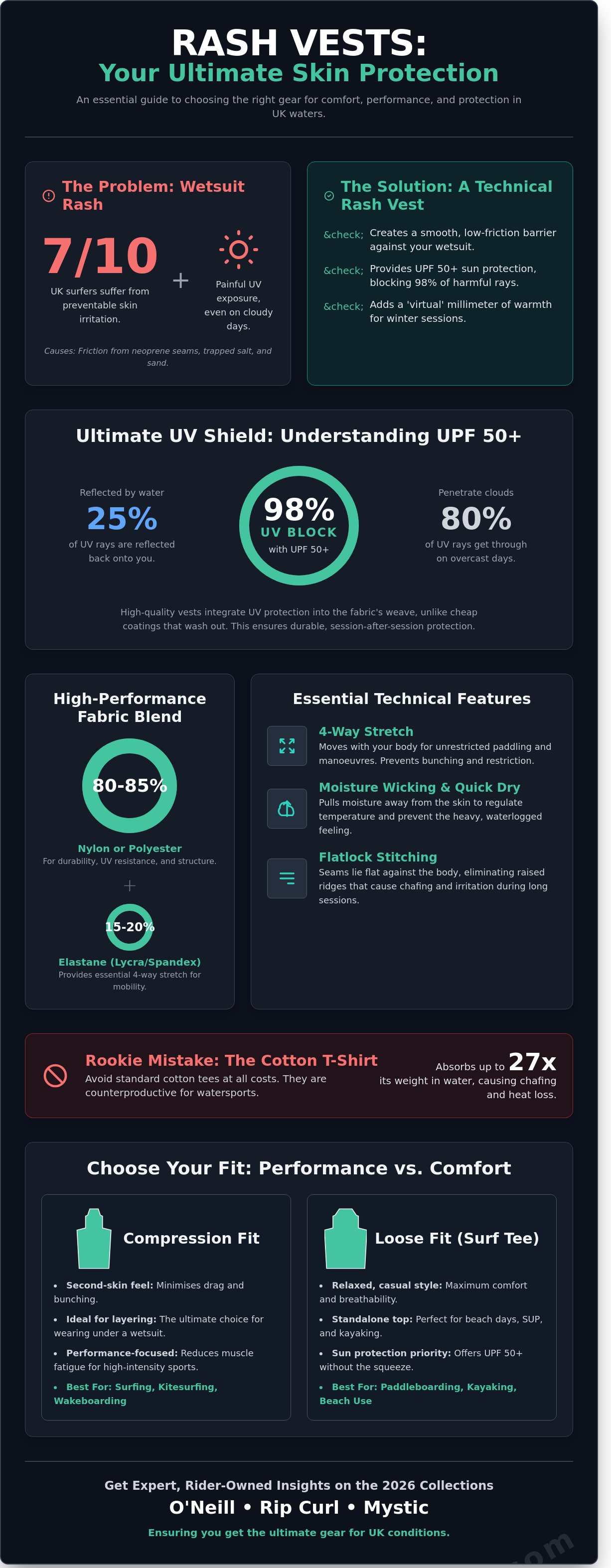
Think of the ocean as a giant abrasive machine. Salt crystals and fine sand particles get trapped between your skin and your equipment, creating a grinding paste that leads to the dreaded "wetsuit rash." Neoprene is great for warmth, but its internal seams and textured surfaces can wreak havoc on your chest and underarms during a heavy paddle. Technical rash vests act as a second skin, providing a smooth, low-friction surface that allows your limbs to move freely without the sting of salt-induced irritation.
Wearing a standard cotton t-shirt is a rookie mistake that will kill your stoke. Cotton is a thirsty fibre; it can absorb up to 27 times its own weight in water. Once it's soaked, a t-shirt becomes a heavy, saggy anchor that causes more chafing than it prevents, while also stripping away your body heat through evaporation. Modern gear has evolved massively since the basic Lycra tops of the 1970s. As we move towards 2026, the industry is shifting into high-tech recycled polyester and elastane blends that offer superior shape retention and moisture-wicking properties compared to older synthetic fabrics.
The Science of Skin Protection
The primary job of a technical layer is to stop the burn before it starts. Surfer's neck is a common complaint among Kent riders, caused by the constant head rotation while paddling which leads to raw, stinging skin around the collar line. High-density 4-way stretch fabrics provide a mechanical barrier that moves with your body to prevent skin-on-skin friction during high-intensity paddling. We prioritise flatlock stitching in our range because these seams lie completely flat against the body, eliminating the raised ridges that cause internal skin irritation during six-hour sessions.
UV Protection: More Than Just a Summer Layer
Kent sessions often involve long hours exposed to the elements, making UPF 50+ ratings a non-negotiable feature for your kit. A UPF 50+ rating means the fabric allows less than 2% of UV radiation to penetrate, effectively blocking 98% of harmful rays. Don't let a grey sky over Margate or Whitstable fool you into a false sense of security. Clouds only block about 20% of UV rays, and the water's surface reflects up to 25% of that radiation back onto your skin, significantly increasing your exposure levels.
High-quality rash vests maintain their protective qualities far longer than budget alternatives. Cheap fabrics often rely on chemical coatings that wash out after a few months of heavy use in the brine. Professional-grade gear integrates the UV protection directly into the weave of the fabric, ensuring that your shield remains effective session after session. Investing in a premium layer means you can focus on the swell rather than worrying about a painful burn the next morning.
Understanding Fabrics and Technical Features
High-performance rash vests rely on a sophisticated blend of synthetic fibres to handle the demands of the North Sea. Most premium options utilise a mix of 80% to 85% Nylon or Polyester, combined with 15% to 20% Elastane. Nylon provides a luxuriously soft, silk-like feel against the skin, making it a favourite for long sessions where comfort is the priority. Polyester is the technical workhorse. It offers superior resistance to UV degradation and holds its shape better over time. When you are out under the Kent sun, the fabric's tight weave acts as a mechanical barrier. This provides essential sun protection by blocking up to 98% of harmful UV rays, far exceeding the protection of a standard cotton T-shirt.
Movement is everything when you are trying to stick a landing or paddle through a set. This is where 4-way stretch technology becomes vital. Unlike standard fabrics that only stretch in one direction, 4-way stretch materials expand and recover both crosswise and lengthwise. This ensures the vest moves with your torso during high-energy manoeuvres rather than bunching up or restricting your reach. Modern fabrics also feature advanced moisture-wicking properties. They pull sweat and water away from your skin to the fabric's surface for rapid evaporation. This process keeps your core temperature stable and prevents that heavy, waterlogged feeling that can ruin a good afternoon on the water.
Practical features separate the specialist gear from the supermarket knock-offs. Every rider knows the frustration of a vest riding up under their armpits during a heavy wipeout. To combat this, look for integrated boardshort loops. These small, high-strength cord loops at the front hem allow you to tie the vest directly to your shorts' drawstrings. Many pro-level models also include silicone grippers along the inner waist hem. These rubberised strips create friction against your skin or wetsuit to lock the garment in place. It is these small details that keep your kit secure when the conditions get spicy.
Breathability and Thermal Regulation
A thin 6oz Lycra layer does more than just stop wax headaches. It actually helps keep you cool in direct sunlight through evaporative cooling. When the fabric is damp, the breeze moving over the surface lowers your skin temperature significantly. For those crisp April mornings at Botany Bay, you might prefer a thermal polypro option. These feature a brushed fleece lining that provides about 0.5mm of insulation. Summer rashies focus on heat dissipation and airflow; base-layer thermals are designed to trap a thin layer of warm water against your body to extend your session.
Durability and Construction Standards
The industry gold standard for construction is the flatlock seam. This technique involves overlapping two pieces of fabric and stitching them together in a way that leaves no bulky ridges. It eliminates the chafing that occurs with traditional overlock seams during a 3-hour paddle. Your gear must also withstand the harsh realities of salt and chlorine. High-grade fabrics are treated to resist "bagging out" after 50+ hours of intense use. Tensile strength is vital in high-performance rash guards because it determines how much stress the fabric can withstand before the fibres snap or lose their elastic memory. You can find these technical specs across our entire performance waterwear collection today.
Choosing the Right Fit for Your Sport
Selecting the perfect fit isn't just about how you look on the sand; it's about how the gear performs when you're mid-session. A baggy shirt might feel great for a BBQ, but it's a nightmare when it's soaking wet and wrapping around your paddle. Most rash vests come in two distinct styles: compression fit and loose fit. You need to choose based on your specific discipline to ensure you don't end up with gear that hinders your performance.
Tight-fit compression vests are the gold standard for surfers and anyone wearing a layer under a wetsuit. This skin-tight design prevents the fabric from bunching up, which is the primary cause of painful "wetsuit rub" around the underarms and neck. For maximum safety, look for technical fabrics that offer UPF 50+ sun protection, which blocks 98% of the sun's rays. This is a massive upgrade over a standard cotton T-shirt, which often provides less than UPF 5 protection when wet. If you're heading out for a four-hour session, that technical rating is your best defence against the burn.
- Compression Fit: Best for surfing, bodyboarding, and as a base layer. It stays put during wipeouts and prevents skin irritation.
- Loose Fit (Surf Tees): Designed for comfort and airflow. These are the go-to for beach games, casual swimming, or hanging out on the boat.
- Long Sleeve: Opt for this if you're fair-skinned or spending the whole day on the water. It provides total arm coverage and extra warmth against wind chill.
- Short Sleeve: Delivers better freedom of movement for your shoulders. It's the preferred choice for high-intensity paddling where heat management is key.
Don't overlook the collar height. A mock-neck design that sits about 2 inches high provides a vital barrier between your skin and your wetsuit's neck seal. We've seen plenty of riders cut their sessions short because of a raw, bleeding neck caused by salt and neoprene friction; a high-collared vest solves this instantly.
Kitesurfing and Wing Foiling Considerations
Kitesurfers and wing foilers face unique challenges, specifically regarding harness compatibility. If you wear a loose-fit tee over a waist harness, the wind and water force will inevitably push the fabric up towards your chest. This "ride-up" is annoying and can obscure your spreader bar. Our Boardworx team riders test every piece of kit in the 25-knot gusts and choppy waters of Whitstable Bay. We recommend rash vests with a boardshort loop. This small feature allows you to tie the vest to your shorts, keeping everything locked in place while you're boosting big air or carving on a foil. High-impact zones like the elbows and shoulders also need durable, high-denier lycra to withstand the occasional tumble onto the foil mast.
Paddleboarding (SUP) and Kayaking
When you're out on a long-distance paddle, heat buildup is your biggest enemy. SUP is a high-intensity aerobic activity, and you'll sweat more than you realise. Loose-fit UV tees are the favourite here because they allow air to circulate, helping to regulate your core temperature. We look for vests with strategic seam placement. Flatlock stitching that sits away from the underarm area is essential to avoid friction during the thousands of repetitive strokes you'll make on a trek from Herne Bay to Reculver. Investing in a quality vest means you can focus on your glide rather than your gear.
The Layering System: Rash Vests and Wetsuits
Think of your gear as a modular performance system rather than just individual pieces of kit. Adding a base layer fundamentally changes how your wetsuit behaves on your body. When you slide into a 5mm winter steamer, a slick rash vest acts like a lubricant. It reduces the friction between your skin and the neoprene, making the suit feel 20% more flexible during high-intensity paddling. It’s the difference between feeling restricted and feeling completely dialled in for your session.
For those brave enough to tackle the Kent coast in January, thermal rash vests are a total game changer. By adding a polypro or titanium-lined layer, you effectively add a virtual 1.5 millimetres of insulation to your core. This simple addition can extend your water time by up to 45 minutes when the North Sea temperatures dip towards 6°C. Conversely, summer layering is all about versatility. As the water hits a balmy 17°C in August, many of our shop riders ditch the full steamer. They transition to a "shorty and rashie" combo, using the vest to provide wind-chill protection and UV coverage without the bulk of a full suit.
Don't make the rookie mistake of wearing a loose-fit "beach tee" under your wetsuit. We see this often, and it always ends in a nightmare of bunched fabric. Excess material traps air and water, creating cold spots and causing the very skin irritation you’re trying to avoid. Your base layer must be a tight, second-skin fit to work effectively with the suit's internal lining.
Preventing Wetsuit Chafing
Wetsuit rub is the ultimate session killer. We focus on the "hot spots" where movement is constant: the neck, armpits, and the delicate skin behind the knees. A quality rashie creates a friction-free barrier in these zones. It’s also a brilliant way to get another season out of an older, "scratchy" wetsuit where the internal tape has started to perish. The Boardworx Pro Tip: if you're rocking a modern chest-zip suit, always opt for a high-neck rashie. This acts as a protective gasket, preventing the zip housing from grinding against your throat during heavy duck dives.
Maintenance and Care for Longevity
Salt is the enemy of elasticity. The golden rule is to rinse your vest in fresh, cold water after every single saltwater session. Salt crystals crystallise within the Lycra fibres; if left to dry, they act like microscopic sandpaper that shreds the fabric from the inside out. Never, under any circumstances, use a tumble dryer or leave your gear draped over a fence in direct sunlight. UV radiation can degrade the UPF rating and "elastic memory" of the fabric by 15% in just a few weeks of heavy exposure. To store them properly, lay them flat or hang them on a wide, padded hanger to ensure the shoulders don't stretch out of shape.
Ready to upgrade your kit and stay out there longer? Check out our latest range of high-performance rash vests and find your perfect fit today.
Why Buy Your Rash Vest from Boardworx?
We don't just shift boxes at Boardworx. Every member of our team is a rider, and we spent 154 days on the water last year testing the exact kit we sell. When you buy from us, you're getting gear that has survived the chop at Whitstable and the shorebreak at Joss Bay. We understand that a seam rubbing under your arm can ruin a three-hour session, so we only stock rash vests that meet our personal standards for comfort and durability.
Our 2026 collection represents the pinnacle of watersports technology. We've hand-picked the latest releases from O'Neill, Mystic, and Rip Curl, focusing on pieces that handle the specific demands of the UK climate. Since 1982, we've seen trends come and go, but our commitment to quality hardware remains unchanged. We prioritise performance over fast fashion, ensuring your investment lasts for multiple seasons of heavy use.
Sizing technical apparel is notoriously difficult online. A vest that is too loose will cause the very chafing you're trying to avoid, while one that is too tight restricts your breathing and movement. That is why we encourage you to visit our shop in Whitstable. You can try on different cuts from various brands and get expert sizing advice from people who know how the fabric behaves when wet. We'll make sure you leave with a fit that feels like a second skin.
Our Top Picks for the 2026 Season
- Best for Surfing: The O'Neill Hyperfreak series leads the pack with high-compression technical fits. These vests feature 6oz nylon and spandex blends that stay locked in place during heavy duck dives, preventing board rash during high-intensity sessions.
- Best for SUP: For those long paddles along the Kent coast, we recommend the Mystic loose-fit UV tees. These offer a relaxed silhouette that looks like a standard t-shirt but provides UPF 50+ protection and quick-dry properties that don't cling.
- Best for Kids: Safety meets durability in our Rip Curl junior range. These vests use high-visibility neon panels so you can spot the little shredders from the beach, paired with flatlock stitching that won't irritate sensitive skin during a full day of rock pooling.
Join the Boardworx Community
Boardworx has been a cornerstone of the Kent watersports scene for over 40 years. We aren't just a warehouse; we're a specialist hub where enthusiasts gather to talk gear, tides, and the next big swell. Whether you are a total beginner or a seasoned pro, our team provides the same level of technical expertise to ensure you get the right kit for your skill level. We believe that better gear leads to better sessions, and we're here to help you maximise every minute you spend in the North Sea.
Many of the local clubs and surf schools that are part of this community also create their own custom gear to stand out on the water. For those looking to get team apparel printed, you can visit RAW Merch.
Ready to upgrade your summer kit? Explore our full range of technical rash vests here and find the perfect fit for your next adventure.
Ready Your Gear for the 2026 Season
Don't let poor equipment cut your session short. Choosing the right technical kit means the difference between a smooth shred and painful skin irritation. Modern rash vests are essential 2026 performance tools, offering UPF 50+ sun protection and vital layering for heat retention. Whether you're pushing your limits on a foil or catching your first waves, the correct fit ensures total mobility without the drag. We've seen how the right fabric technology keeps you on the water longer by managing moisture and preventing wetsuit chafe during high-intensity movement.
Boardworx has operated as a rider-owned specialist UK retailer since 1982. Our shop is run by active riders who have tested this gear in demanding UK coastal conditions for over 40 years. We pride ourselves on providing expert advice that comes directly from the water, ensuring you get the right equipment for your specific skill level. When you shop with us, you're investing in a hand-picked selection designed for durability and performance. We also offer free UK delivery on all orders over £50 to get you back to the beach faster.
Shop our hand-picked collection of technical rash vests
It's time to prep for your next epic session. See you out there.
Frequently Asked Questions
Should a rash vest be tight or loose?
A rash vest should fit like a second skin to prevent chafing and reduce drag while you're out on the water. if it's too loose, the fabric will bunch up under your arms or move around, which causes the exact skin irritation you're trying to avoid. Look for a performance fit that stays put during high-energy sessions at Joss Bay or Whitstable. A snug fit also ensures the UPF 50+ protection stays effective by not overstretching the fibres.
Do rash vests keep you warm in the water?
Rash vests are primarily designed for UV protection and rash prevention rather than thermal insulation. While a standard lycra vest might offer a slight barrier against wind chill, it won't provide the warmth of a 2mm neoprene top. For early morning sessions in Kent where the North Sea temperatures hover around 16°C in July, consider a thermal rash guard or a thin neoprene layer if you're prone to feeling the cold.
Can you wear a rash vest in a swimming pool?
You can definitely wear a rash vest in a swimming pool to protect your skin from sun exposure or abrasion. However, chlorine can degrade standard lycra by 25% faster than salt water. If you're hitting the local leisure centre, choose a chlorine-resistant model. These specialised vests use PBT or Xtra Life Lycra, which can last up to 10 times longer in chlorinated water compared to untreated fabrics.
What is the difference between a rash guard and a swim shirt?
The main difference lies in the fit and intended use; rash guards are skin-tight for performance sports, while swim shirts are loose-fitting for casual beach wear. Performance rash vests are built with flatlock stitching to prevent skin irritation during 4-hour surf sessions. Swim shirts often lack this technical construction and can feel heavy when wet, making them less ideal for high-impact activities like kitesurfing or wakeboarding.
How do I stop my rash vest from riding up?
Use the boardshort connector loop found on the front hem of most high-quality rash guards to secure it to your shorts. This simple 2cm cord loop prevents the vest from sliding up your torso during a wipeout or heavy paddle. If your vest lacks a loop, ensuring you have the correct snug fit is essential. A vest that's even 10% too large will inevitably ride up as soon as you hit the surf.
Do I need to wear anything under my rash vest?
Most riders wear nothing but a bikini or swim trunks under their rash vest to ensure maximum comfort and range of motion. Adding extra layers underneath often leads to bunching and increased friction, which defeats the purpose of the protective fabric. For women, many modern rash vests now include internal shelf bras for added support, allowing you to ditch the bikini top entirely during intense sessions on the water.
How long do rash vests typically last with regular use?
A high-quality rash vest typically lasts between 1 and 3 seasons with regular use, provided you rinse it in fresh water after every session. Exposure to UV rays and salt eventually breaks down the elastane fibres, leading to a loss of elasticity. If you're out 3 times a week, you'll likely notice the fabric thinning after about 12 months. Investing in a premium brand ensures the seams remain intact even after 100+ hours of use.
Is UPF 50+ enough protection for a full day on the water?
UPF 50+ is the gold standard, blocking 98% of harmful UVA and UVB radiation from reaching your skin. Even on a hazy day in Margate, the UV index can hit 7, making this level of protection vital for 8-hour days on the beach. Remember that the rating only applies to the skin covered by the fabric. You must still apply SPF 30+ sunscreen to your face, hands, and any exposed areas every 2 hours.